
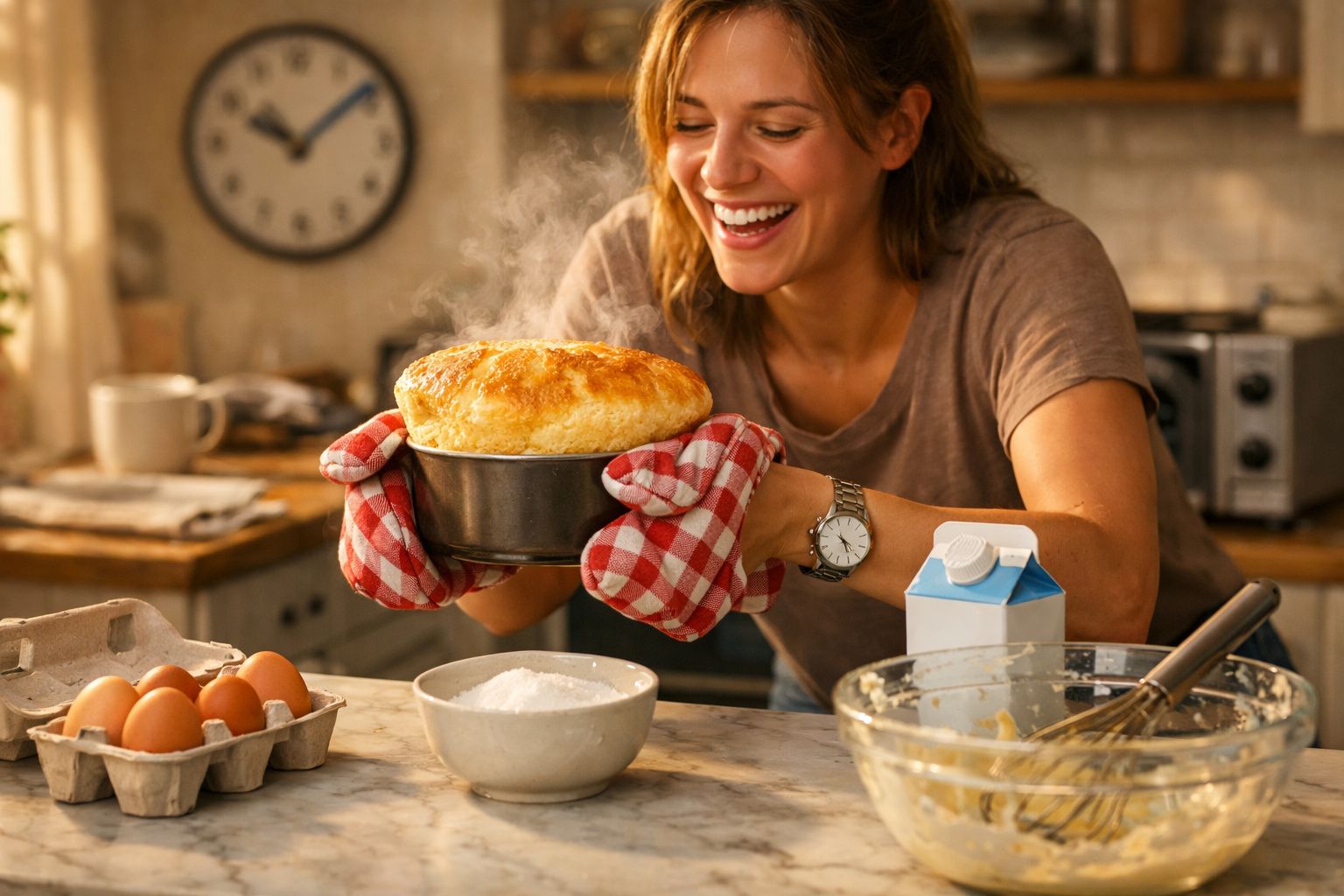
The “emergency cake” that rescues busy evenings
Unele seri cer ceva dulce făcut în casă, dar fără chiuveta plină de vase și fără un plan de bătaie de cap. Când timpul e scurt și vrei totuși un desert care să pară „pe bune”, soluțiile simple câștigă.
În Franța, o prăjitură minimalistă de ciocolată a ajuns discret vedeta serilor aglomerate: doar trei ingrediente, un singur bol și un timp de coacere mai scurt decât o pauză de reclame. Sună prea frumos ca să fie adevărat, dar iese o prăjitură moale, ușor tremurată la mijloc, care dă impresia că ai stat ore întregi în bucătărie.
This ultra-soft cake has become a kind of plan B dessert in many French households: the one you make when guests show up unannounced or when the day went wrong and you need something sweet, fast.
A hot, homemade chocolate cake on the table in around 10 minutes of active work is turning into a quiet weeknight phenomenon.
The appeal is obvious. There is no need for scales stacked with ingredients, no resting time, no technical steps. You crack some eggs, melt some chocolate, add sugar, stir, and bake. The centre stays gently wobbly, somewhere between a fondant and a light custard, while the edges set just enough to slice.
The 3-ingredient formula behind the trend
The base recipe reads almost like a memory trick rather than a full shopping list: eggs, dark chocolate, sugar. That is all.
- 4 medium eggs, ideally at room temperature
- 200 g dark chocolate (roughly 7 oz, 52–70% cocoa)
- 50 g caster sugar (about ¼ cup)
No flour, no added butter, no baking powder. The fat in the chocolate carries the texture, creating that melt-in-the-mouth feel. With no starch, the crumb stays moist, almost creamy. The structure comes from gently cooked eggs, which set just enough to hold everything together.
The cake sits at the crossroads between a dense fondant and a lighter chocolate flan, with an almost trembling heart when it leaves the oven.
How the 10-minute ultra-soft cake works
The method is straightforward and designed for real-life kitchens rather than professional bakeries. It suits 4–6 people, ideal for a small dinner or last-minute snack.
Basic method, step by step
- Preheat the oven to 180°C (about 355°F). Line or lightly grease a 20 cm (8-inch) round tin.
- Chop the chocolate and melt it in the microwave in short bursts or over a bain-marie until smooth and glossy.
- Whisk the eggs and sugar in a bowl for a minute or two, just to blend and aerate slightly.
- Pour the melted chocolate into the egg mixture in a thin stream, whisking continuously until the batter is silky and uniform.
- Scrape into the tin, smooth the top, and bake for around 10 minutes.
The crucial detail sits at the end: the centre should still tremble faintly when you jiggle the tin. If baked until fully set, the cake loses much of its suppleness. A five-minute rest at room temperature helps it firm just enough without losing the soft core.
From basic to “restaurant-style” in under a minute
Although the plain version already delivers strong chocolate comfort, many home cooks are turning it into an easy “showpiece” dessert with tiny tweaks that take seconds.
- A pinch of flaky sea salt in the melted chocolate to intensify cocoa notes.
- A small handful of chopped nuts sprinkled over the top before baking for a crunchy contrast.
- A scoop of vanilla ice cream next to the warm slice for a hot-and-cold effect.
- Fresh berries on the side to bring acidity and colour.
- A spoonful of caramel or fruit coulis drizzled on the plate for restaurant-style plating.
What began as a three-ingredient survival cake easily doubles as a dinner-party dessert with the help of a few cupboard extras.
Why this cake keeps being made again and again
Beyond the taste, the cake benefits from something recipe developers chase and rarely achieve: instant memorability. The ratio 4–200–50 sticks in your mind. After two or three attempts, many people no longer check a recipe card.
In an era where ingredient lists often run to two dozen items, this kind of minimalism feels refreshing. There is also a psychological factor: when a dessert requires only three things most people already own, the mental barrier to baking drops dramatically.
A lighter feel without being “diet food”
The absence of flour and added butter gives a different mouthfeel compared to a classic sponge or brownie. The texture is dense yet supple, with less of the heavy, cloying sensation that rich cakes often bring. That does not make it a health food, but it changes how people perceive portion size and indulgence.
| Style of cake | Main structure | Typical texture |
|---|---|---|
| Classic sponge | Flour + eggs + baking powder | Light, airy crumb |
| Brownie | Flour + butter + chocolate | Dense, fudgy |
| 3-ingredient ultra-soft cake | Eggs + chocolate fat | Moist, almost custardy centre |
Keeping leftovers soft and avoiding common pitfalls
If there are leftovers, they hold surprisingly well at room temperature for a day or two, covered or tucked under a cake dome. Chilling in the fridge tends to firm the texture and mute the flavour, so many French home bakers keep the cake on the counter instead.
A brief 10–15 seconds in the microwave revives an older slice, loosening the centre again. Served cold and cut into small squares, it also works as a bite-sized treat with coffee or part of a brunch spread.
There are, though, a few frequent mistakes:
- Baking until the centre is fully set, which leads to a drier, more brownie-like texture.
- Overheating the chocolate, which can turn grainy and affect the final smoothness.
- Using very low-quality chocolate, where sugar and additives crowd out cocoa flavour.
What this cake says about changing home cooking habits
The success of this 10-minute cake fits into a broader shift in home cooking. Across social media and recipe platforms, ultra-short ingredient lists and “pantry-only” desserts are gaining traction. People want the feeling of something made from scratch, but with the time investment of a ready-made snack.
This kind of recipe also helps newer bakers understand a few core ideas. For instance, it shows how eggs alone can set a dessert, or how cocoa percentage in chocolate changes both flavour and texture. A higher cocoa content usually means a more intense taste and slightly firmer result; a milder bar with more sugar will bring extra sweetness and a softer finish.
Practical variations and scenarios for real kitchens
For households dealing with allergies or specific diets, the cake raises questions. As written, it is naturally free from wheat flour, which can suit some gluten-avoiding guests, provided the chocolate is checked for traces. It is not suitable for vegans, since eggs are central to its structure, and replacing them would require a very different formula.
In practical terms, the recipe adapts well to different situations:
- For a child’s sleepover, it can be baked in a square tin and served like brownies.
- For a date night, it can be baked in two small ramekins for individual molten-style portions.
- For a larger gathering, the quantities can be doubled and baked in a bigger tin, with a slightly longer cooking time while keeping the centre soft.
There is also a psychological comfort angle. The smell of chocolate baking, even for just 10 minutes, changes the atmosphere of a home. In French food culture, that ritual often signals care and togetherness, even when time is short. A simple three-ingredient cake might not rival elaborate patisserie, yet it delivers something many people quietly need on weeknights: a small, achievable moment of pleasure that fits between emails, homework and washing up.




Comentarii
Încă nu există comentarii. Fii primul!
Lasă un comentariu